This article contains spoilers.
The Year of the Fire Horse has started off with a bang, and I unexpectedly found myself reflecting on the Christian image of God. Whilst having an intensive spiritual cleansing journey in May, I realised I had to rewatch this movie.
What you will find in this post
Under the first title, you’ll find the plot of the movie. If you want to be safe and not know too much, check the links for the movie trailers in this section instead of reading the text.
Next, general view and my thoughts on the movie.
Third, how this relates to what I know about life and death through Beyond Quantum Healing.
Under the last title, my final thoughts on the movie and the healing I went through watching it.
The Plot of The Shack
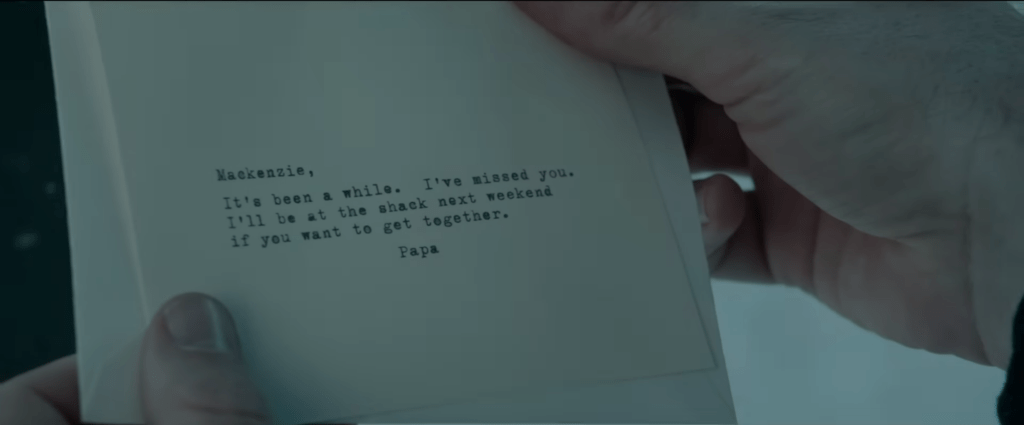
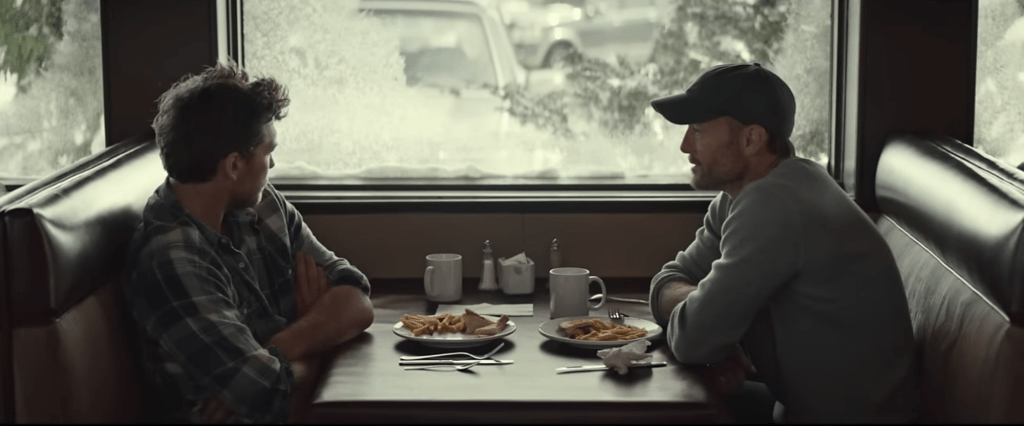
The Shack is a story of a grieving family man, Mack (Sam Worthington), who receives a letter from Papa. The message contains an invitation to the shack. Having experienced a traumatic loss of a child, Mack sets off for the cabin not knowing what to expect. On this journey he encounters the three forms of God – the Father, the Son and the Holy Spirit. His conversations with the three faces of God in human form give Mack the opportunity to process and question life, God and the immense pain and injustice that God, in his omnipotence, should have prevented. Why does God allow injustice to happen? Where was God when he was needed most?
IMDb: The Shack 6.3/10 (May 2026)
Thoughts on the film
The Shack has been met with mixed reviews. It has a rating of 6.3/10 on IMDb, with viewers often emphasizing the personal emotional experience. On Rotten Tomatoes, critics say the film offers nothing new, and is just a Christian afternoon film. Both religious and non-religious people have criticized the theological aspect of the film, but viewers have also found relief in the nonconformity, as the film moves from a Christian perspective to a broader and more open spiritual framework. The religious criticism is somewhat understandable when you know the origin of the story. The Shack is based on William Paul Young’s bestselling book of the same name, which he originally wrote to express his own spiritual views to his children.
I somewhat agree that the film does not necessarily offer ready-made answers to big questions, but then again, I was not looking for answers. Rather, The Shack engages in a dialogue that many of us have perhaps had in our minds during a dark night of the soul, and in their gentleness the answers fill the heart with light. On the other hand, the film’s answers often come metaphorically or hidden in the dialogue so that only a person with spiritual understanding, through religion or spiritual experience, might be able to find them. Aligned with that, some of the audience’s reviews tell that they received something new from the film after rewatching.
In the following paragraphs, I will go through what I liked and what I didn’t like about the film.
What I enjoyed
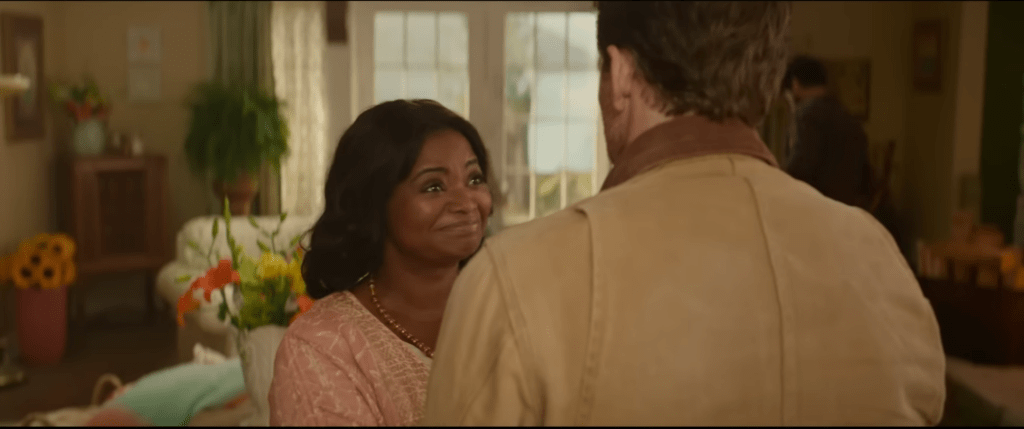
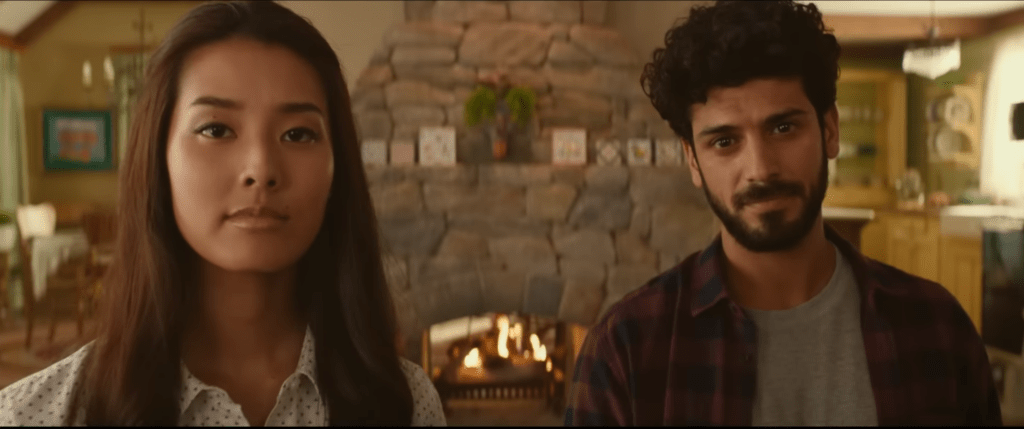
The film brings the abstract into the concrete through small gestures: flour-covered hands, a garden that is perfectly beautiful in its chaos, and “Papa” instead of God. “Papa” sounds like someone who is present, while the almighty God can sometimes feel distant from human beings.
If you have met Spirit, you probably know the feeling of suddenly realising that Spirit has always been there, even when it didn’t feel like it. This is how Mack and Papa meet: after much questioning, God still welcomes him with acceptance and warmth.
One healing aspect of the film for me personally was Mack’s soft, secure masculinity and his humanity. In a world where confrontational encounters with men can be common, it felt comforting to witness what I would consider a grounded, emotionally mature man. Mack was broken, but he was willing to challenge himself, question God, and move through pain towards healing and growth.
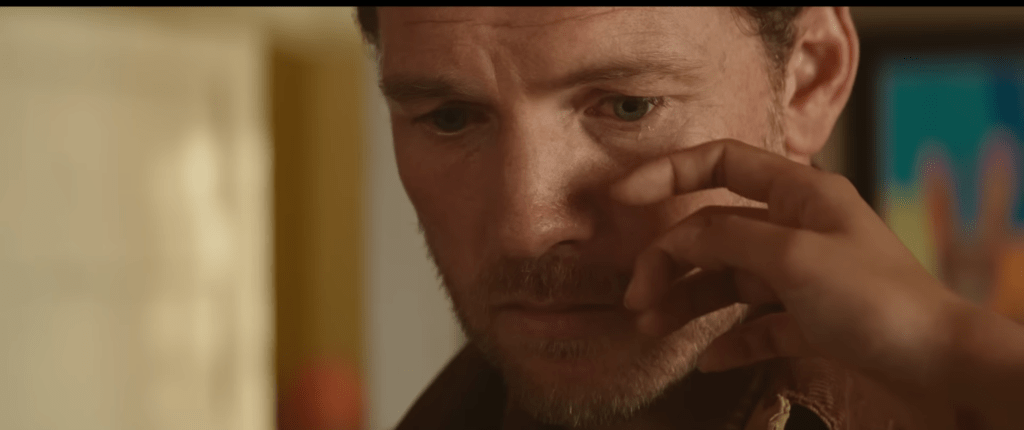
Sarayu: We all collect things we value, don’t we? I collect tears.
What I disliked
What I liked least were some of the religious explanations and the somewhat judgemental Justice character. Most importantly, the discussion around forgiveness felt oversimplified. Although a film has limits in how deeply it can explore difficult topics while still reaching a wide audience, I felt the portrayal of forgiveness left too much room for debate.
The film may have intended to encourage to let the all-knowing God be the judge, after all, he can see the whole picture, but I got caught up in the specifics of the process of forgiveness.
Forgiveness and letting go of pain are important themes, but the way they were presented sometimes left boundaries unclear. It can become tempting to search for explanations for harmful behavior in someone’s past. Yet being hurt is not a justification for injustice, and neither is being evil. That, however, is a much larger discussion.
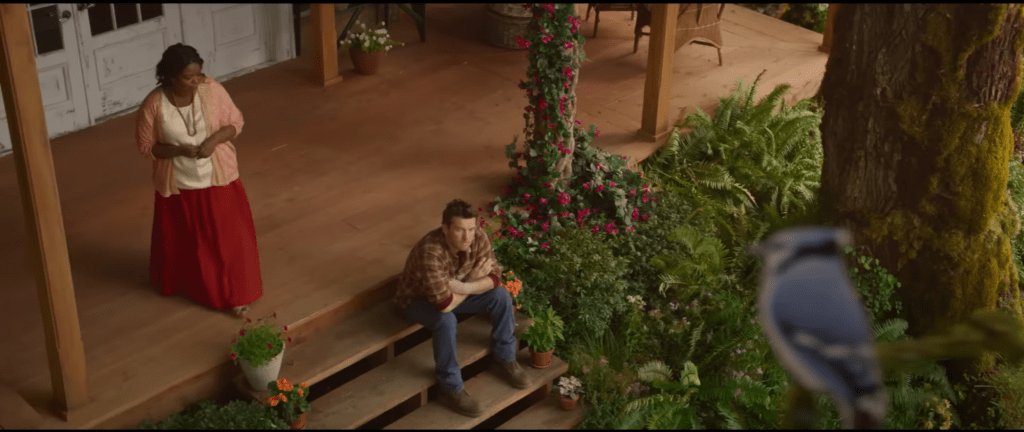
Sarayu: And your basis for something being good is what?
In relation to Beyond Quantum Healing
The movie may be Christian, hence the Holy Trinity, but for anyone who has questioned life, consciousness, or the possibility of something greater, I would still recommend watching The Shack regardless of personal beliefs or spiritual background.
As a BQH practitioner, it may be easier than average for me to see life and death as relatively “neutral” events to which human experience gives meaning and emotional weight. People in BQH sessions have described the soul planning certain challenges, and life with a particular length. In this perspective, difficult experiences become part of what shapes the soul through human life and emotion.
These experiences teach us what it is to be human, to live through limitation, emotion, attachment, grief, and love.
Mack, entering a garden: Wow, well this is — wild.
Sarayu: That isn’t the word in your head.
Mack: Ok, this is a mess.
Sarayu: It is, isn’t it? It’s so beautiful.
When it comes to traumatic events, it can feel relieving to think that the soul may experience suffering differently from the body, making painful experiences less absolute and personal. Interestingly, psychology also recognises forms of mental distancing in trauma responses, such as dissociation. It is a mental disconnection that can range from emotions to the body or even one’s sense of identity.
From this perspective, even life may eventually be seen as a deeply felt story.
Final thoughts
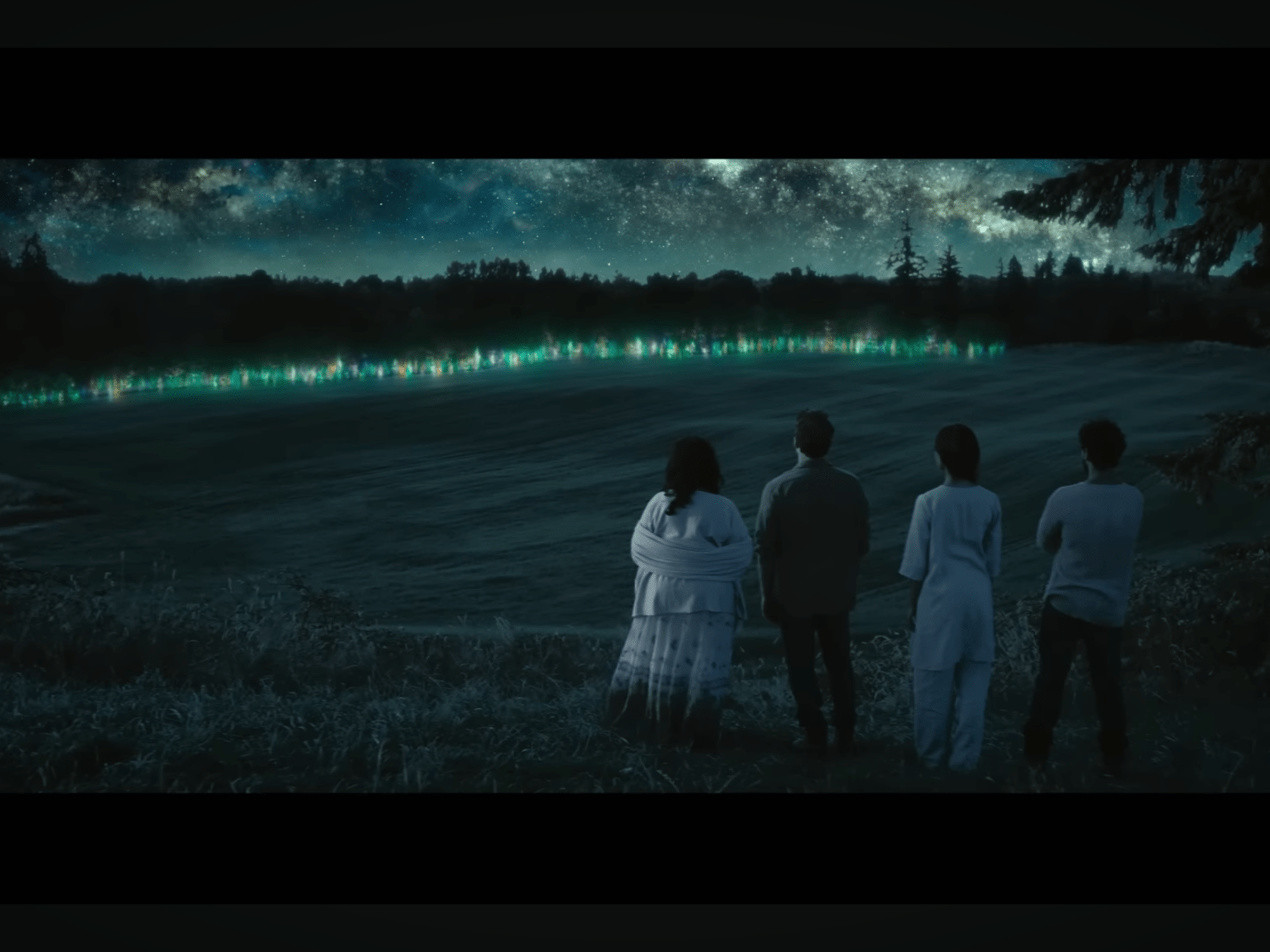
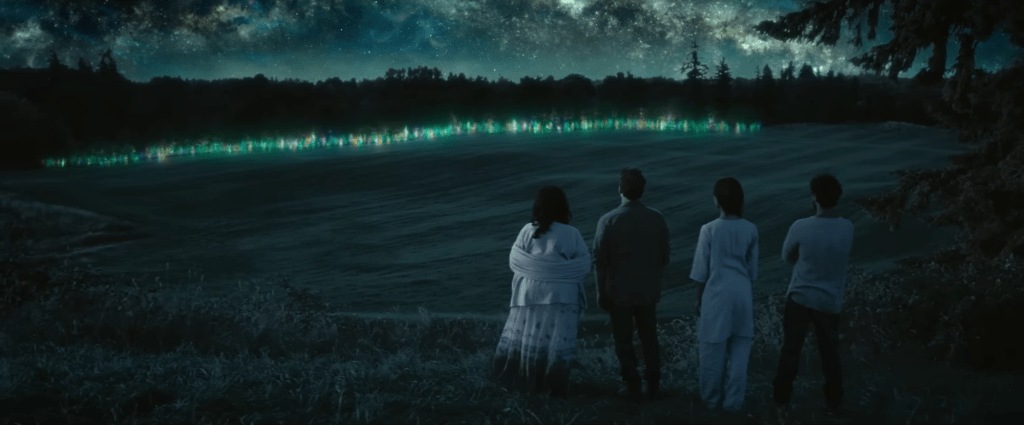
The film was a beautiful story of healing and growth. It was a visually pleasing, fantasy-leaning drama. Although the environment was sometimes clearly artificial, rather than bothering me like it usually would, it created magical, god-made transitions from one reality to another.
To me The Shack was a perfect way to release old energies, emotions buried yet ready to leave for good. The movie was heartbreaking yet beautiful in the way that meetings with spirit are – serene, eternal, purifying. Now why is it, drinking tea whilst crying your heart out watching a movie like this is such a must?
Papa / Elousia: It does a body good to let the healing waters flow.
So, if you are like me, you might want to get your herbal tea ready, and spend a couple of hours living through Mack, while he questions the fairness of life and the presence of God at times of need.
 Light Horizons